Monday, May 16, 2016

Growing Sunflowers from seed

As I looked for flowers that would attract a variety of pollinators and help with pest control, sunflowers featured on almost every gardener's list.


I got a packet of Burpee Organic Mammoth Sunflower seeds. Mid- March, I sowed them directly in the flower bed keeping a distance of about 18 inches between them.


Very soon, every one of them had germinated. I had not planned on this. Two seeds were planted at each spot expecting about 50% germination. However, the rate was 100% and since I can never pull out a perfectly looking plant for thinning (and I read that sunflowers do not like being transplanted), I let them be.


It was wet during this time and they seemed to be growing slow. They were about a foot in height after about 3 weeks.


In about 5 weeks, I saw this star like bud at the tip of one plant.


In the first week of May, it looked like this. The flower was forming inside. I couldn't wait to see what the first sunflower in my backyard would look like! It was getting nice and warm in the afternoons, and I had planted these where the afternoon sun shone abundantly on them. Perfect weather for sunflowers!


By the second week of May, the flower was ready to bloom. The petals began to unfurl.


The yellow beauty drew my eye to it every time I stepped into the yard.


The flower head seemed to be getting bigger. The temperatures were in the upper eighties and it wasn't raining too much.


The ray flowers were doing their job, and the disc flowers were slowly blooming.


Almost prefect looking!


Then it began to rain. Every afternoon for the past three days, and not just a stray shower. It rained at least 3-4 inches in 2 days. This was what the sunflower looked like this morning.


More updates on the sunflower saga in later posts!

Friday, May 13, 2016

Nasturtiums

Flowers that attract pollinators to the yard and help as companion plants by warding away pests are always valuable additions to any yard. While looking for such flowering plants that thrive in Zone 9 of the US plant hardiness map, Nasturtiums featured as a favorite among gardeners. I got a packet of seeds and sowed them directly in the flower bed in mid-March. Winter had been mild this year and the likelihood of frost was very low.


Soon, tiny plants emerged. Their distinctive leaves are edible, making a great addition to salads.

For a few days, we had a lot of rain and the temperatures remained in the sixties. The plants kept growing but they didn't look like they liked the weather. I read that they like it hot and I hoped they would survive until it warmed up, which would be soon.
The temperature did climb into the upper seventies in two weeks, and I was greeted by this first flower one morning when I was checking on the day lilies. It was a pleasant surprise. It is a lot of joy when you have raised a plant from seed.


Soon this yellow beauty joined the previous one.


Some more flowers and some Thai basil flowers nearby.


More hues of oranges and yellows appeared in the next few days.


 The flower has an interesting looking bract at the back.


That part of the flower bed looks like this. I am so glad this Nasturtium growing trial can be added to my success stories for this spring. 


Thursday, May 5, 2016

Growing Bush Beans

An unexpected gift of different kinds of seeds from some dear friends came as a delightful surprise this spring. With the addition of another raised bed, I now have more area for vegetable growing. I decided to try sowing beans. The seeds had a packet of 'Blue Lake' Bush Beans seeds. I chose 6 and put them in little seed starters in the first week of March.


They were about three inches high in about 2 weeks and I put them in my new raised bed with little pea plants for company. 


They were bush beans so I didn't have to worry about putting up a trellis, but I decided to put cages around all six plants. I found these nice green ones that seemed perfect!


By the second week of April, all the plants had small white flowers.


Soon enough, I noticed the very first tiny bean among the flowers! It was exciting to see the development!

The little ones were growing fast and here is a picture of a cluster of beans.

On the last day of April, about forty + beans were ready to be harvested. I added them to a salad. They were delicious. 


Tuesday, May 3, 2016

Visit to Texas City Dike and Galveston

Two weekends ago, we decided to make another trip to Galveston. It was a good time to see some migratory birds that stop there before embarking on a long trip across the gulf of Mexico.
We set out at about noon after a quick lunch. Traffic was heavy and as we approached Galveston, we decided to visit the Texas City dike. The sign always greets us as we drive to the island and it was time to go check out another small town that we had never been to before. A short drive later, the dike lay ahead of us. After the entry fee of $5 was paid, we drove slowly on the dike that seemed to be a popular fishing and picnicking spot for a lot of sun loving people.

Some of the birds that I was looking out for on the dike were the skimmers, Oystercatcher, and terns. None of them disappointed, and I was even treated to a small flock of American Avocets. 

These skimmers were in large numbers, and after spending some time watching them, I was rewarded with catching them in action. Skimmers have an interesting beak, with the lower mandible being longer than the upper. Their feeding habit is peculiar as they hover over water with just their lower mandible skimming the water for small fish. 


The Oystercatcher is a quiet bird with a long, bright orange beak that is uses to feed on oysters, mussels and clams.  It kept a close eye on how close I was getting. I didn't get ruffle any feathers and stayed where I was.


The American Avocet with adult plumage. Another bird with yet another fascinating beak.


I had seen least terns before, I got to see two more, Forster's Tern (orange and black bill) and Sandwich Tern (black and yellow bill)


After spending over an hour on the dike, we headed back. This road called Skyline drive on the left, running along the sea caught our attention and we decided to check it out. It was a good decision. The views were beautiful with spring meadows on the hillside. 


In this perfect setting, I was delighted to find a lighthouse. There used to be a lighthouse in the Galveston bay called the Half Moon Shoal Lighthouse which was destroyed in the big storm of 1900. Eventually, it was rebuilt in 1902. This one is a replica of it and it stands near the base of the Texas City dike, on Skyline Drive in the Bay St. Park. Being a lighthouse aficionado, I thought this find was very interesting. 


A little further, there was this sculpture of an Indian on a horse, looking skyward with both his arms outstretched, spear in hand. It is called Somewhere on the Trail  by David Govedare. It was dedicated on October 19, 1999, and I am still trying to find the story behind it.


This sculpture of three arrows soon after the previous one was intriguing. I have not been able to gather much information about it yet.


It was a beautiful day and people were taking full advantage of it.


On the way back from the dike and heading to Galveston, I saw this white horse grazing lazily on the side of the road with three cattle egret for company.


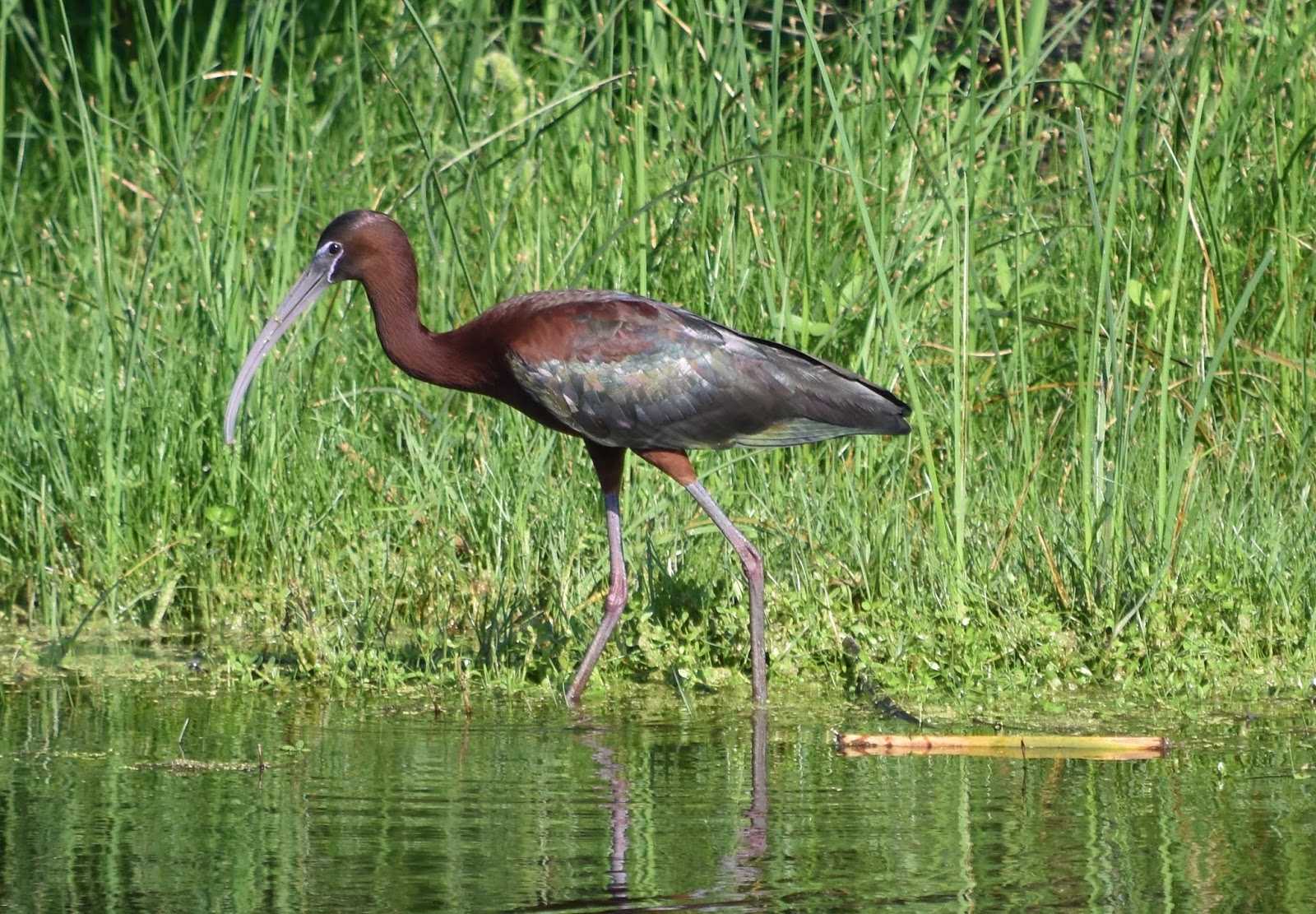
The next stop right after this was Lafitte's cove at Galveston. I like how this little paradise is nestled in the midst of so many homes. Just as I started to walk towards the wooded area, in the pond was White-faced Ibis (lifer) and two Black-necked Stilts.


As I turned the corner, there were other birders who pointed out a Rose-breasted Grosbeak to me. From this point on, all the birds I saw at the reserve were lifers, much to my delight!


These Warblers- Black-and-White, Blackburnian, and Magnolia and also the Tanager pair made the visit worthwhile.


We stopped for some dinner on the seawall after all the birding and headed back home. 

Saturday, April 30, 2016

A little about the vegetable patch last year

I had a post last year about my little vegetable and herb garden. I was starting back after a long break. When I had a vegetable patch about 10 years ago, I had only cucumbers, okra and some cantaloupe. The crop was great, and we had to give away some of the produce. Then life got busy and I didn't pursue gardening at all for a few years. I did have a few succulents and a few flowers,  but I didn't venture into vegetable growing.

Last year, a couple of great people inspired me into getting myself a raised bed. With the help of some muscle from my husband, who supports my whims and takes keen interest in the progress, we made trips to Home Depot and soon I had a cedar plank raised bed.

Advantages of cedar is that it is untreated wood, and it does not rot or get infested like other kinds of woods. A raised bed exposed to the elements will easily last about 7-10 years, I am told. The plank was 10 by 2 and 16 feet long. We got a bed of 6 by 2, giving me an area of about 12 square feet. The disadvantage of cedar is that it is a little expensive, and not all stores carry planks that size.

Soon, I had 2 cherry tomato plants growing really well in the bed, along with a Serrano pepper and a bell pepper plant. The other half of the bed was herbs. Genovese basil, Thai basil, and Sweet basil. There was also some Oregano that I barely saw until it was September, and some garlic chives that didn't make it beyond 2-3 weeks. I had overcrowded the bed without knowing it. The cherry tomato yield was fantastic, we had at least a bowlful of tomatoes everyday for two months. The peppers got crowded, and bell peppers didn't produce at all until fall, only after the tomatoes were pulled out, and it got a little cooler.


The herb garden was a big success. I even managed to get two jars of pesto from all the basil. Thai basil seasoned a lot of summer salads, noodles, and a healthy version of Basil fried rice. Chives, rosemary, and mint also made it to the kitchen every now and then. I got a little bit of lemon grass from a friend and that took root easily. Soon, it was a good bush. We had a mild winter, but lemongrass tea provided relief to neighbors and friends every time there was a complaint of a scratchy throat or a stuffed up nose.

I had planted zucchini squash earlier on in April, and it seemed to be growing well. It produced a lot of flowers, only male ones initially, and female flowers after about 6 weeks. Yet, it was a total failure. I didn't get even one squash from it. There were 4 plants and they grew enormous leaves and a great number of flowers, but no fruit. I am still not sure what went wrong.


These Zinnias as companion plants to the zucchini seemed to be doing very well.


These lovely bell peppers grew in late September after temperatures had cooled a little. I was happy with the size. I got a few more until December. 


I have learned a few lessons and my vegetable garden this year will be a little bigger and hopefully the yield will be better than last year. There will be a few additions to the herb garden.

Tuesday, April 26, 2016

Birding- Lifers and Lists

Some events that could be categorized as challenges presented themselves earlier in the year and they kept me from updating the blog as often as I would have liked to.
In an attempt to counter the effects of those stressful situations, I took to visiting nearby places that I hadn't visited in all the years we have been here on the Texas Gulf Coast. The Birding group I have joined on Facebook always has suggestions to offer and a host of information on migratory patterns and sightings. Visits to Surfside, Port Aransas, The Brazos Bend State Park, and Galveston were a result of these recommendations.
Everyday you learn something new is an adage which rings true all the time. Every time I visited the Facebook page of the group, I would see people using words I hadn't heard before.
"This one was a 'lifer'",
"How many in your 'list' now?"
Soon I learned that the first sighting of any species was a 'lifer'. People kept elaborate notebooks with life lists or e-lists that included details of all bird species they had ever sighted along with information about where the sighting took place, date and time and additional information one would consider useful. While I am an avid birder, I had no such list, so I decided to make one. I just added names of birds and where I had seen them. I had over a hundred names already.

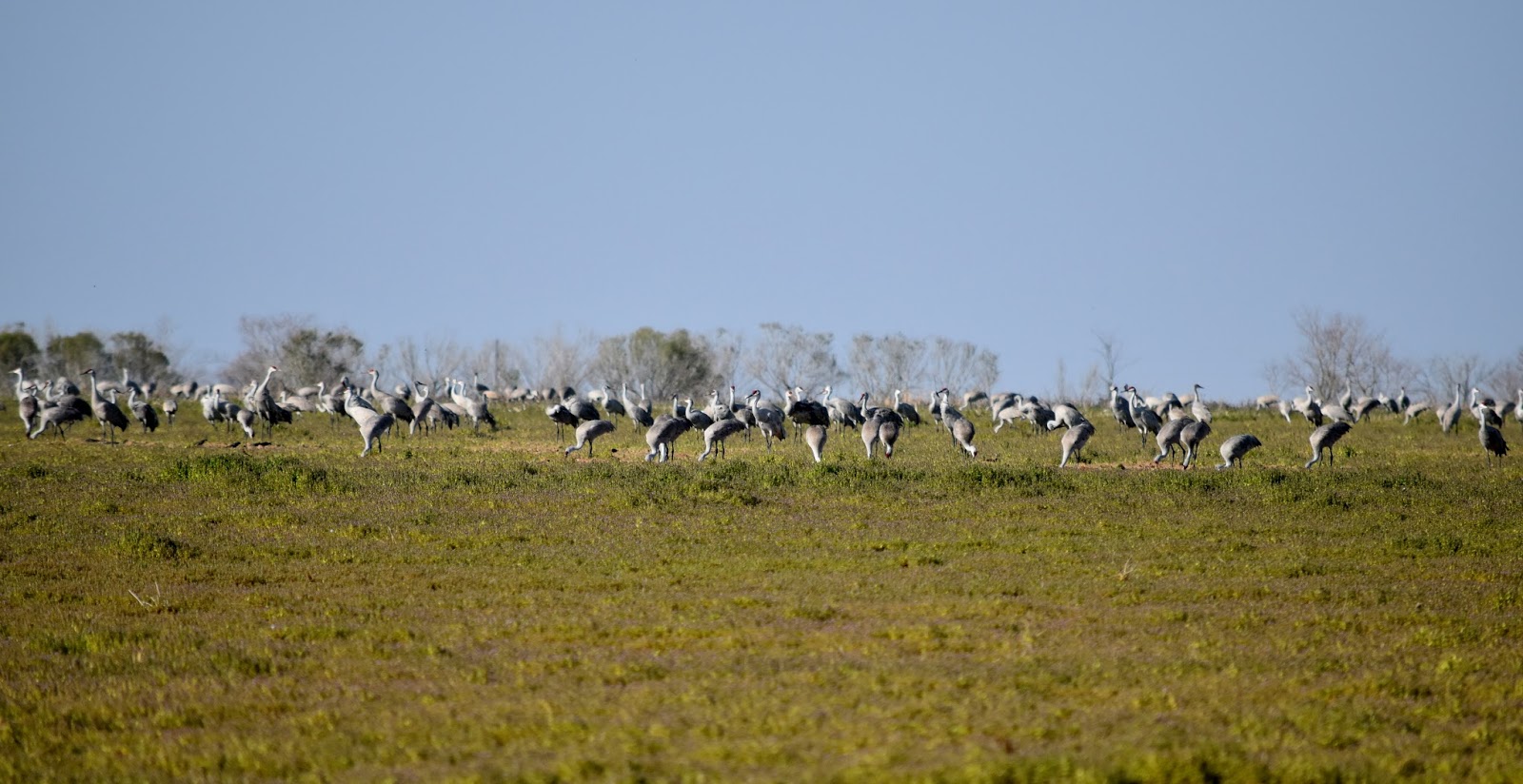
Some of the names on my wishlist were Sandhill Cranes, Whooping Cranes, and Wood Storks. While I have yet to see the latter two, I managed to get a good look at a very large flock of Sandhills. They were together with a much bigger gaggle of Snow geese. It was like hitting a jackpot. I had been looking for them for a while. I heard their call and sure enough, there they were! Dozens of them! Coming so close to the sighting of Roseate Spoonbills that had put on quite a show for me at Surfside, this was indeed the icing on the cake.